Health and Safety Policy — Barnet Skip Hire
 Barnet Skip Hire maintains a clear and proactive Health and Safety Policy designed to protect employees, contractors, customers and the public across our rubbish company service area. This statement sets out our commitment to safe operations, risk control and continual improvement. The purpose is to ensure that all waste removal and skip hire activities are carried out with due care, that hazards are controlled and that the organisation complies with all applicable health and safety obligations. Safety is integral to our operational planning and daily work practices.
Our policy applies to all aspects of the rubbish collection service, from site preparation and skip placement to loading, transport and disposal. We expect everyone who works on behalf of the company to understand their responsibilities, follow safe systems of work and report hazards. The Board and senior management provide visible leadership and resources to maintain a safe working environment while the operational team implements procedures for routine and non-routine tasks. A hierarchy of controls is applied to eliminate or reduce risks wherever possible.
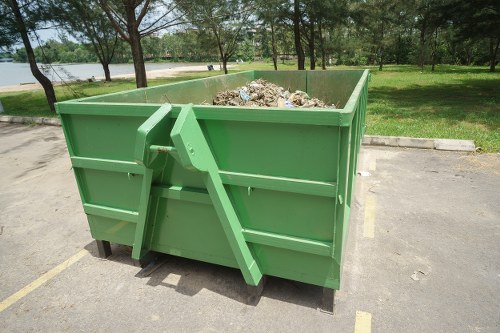 Responsibilities are clearly allocated: management will ensure policy implementation, supervisors will enforce standards and operatives will adopt safe working practices. We emphasise training, supervision and competence: induction training is mandatory, and ongoing refresher sessions cover manual handling, vehicle safety, hazardous waste awareness and safe use of plant such as skip loaders. The rubbish clearance and disposal teams are required to use approved lifting techniques and mechanical aids where practicable to reduce manual handling injuries.
Risk assessment is central to our approach. Before any job begins, a site-specific assessment identifies hazards such as unstable ground, overhead obstructions, traffic interaction and potential hazardous materials in loads. Control measures are documented and communicated to staff and contractors. We maintain documented safe working procedures for routine waste removal tasks and temporary works, and managers review and update assessments when conditions change or after any incident. These assessments support operational decisions and ensure our rubbish disposal teams work within agreed safe limits.
 Personal protective equipment (PPE) is provided as required and its use enforced. Typical PPE includes high-visibility garments, protective footwear, gloves, eye protection and weather-appropriate clothing. Where higher risk activities occur, additional protective measures are specified. The company maintains PPE records and inspection schedules. Maintenance and correct storage of equipment and PPE form part of our routine checks to protect personnel engaged in skip hire operations and waste collection across the service area.
Safe vehicle operation and transport controls are a priority. Drivers must be competent, hold required licences and complete vehicle checks before departure. Loading procedures ensure secure containment of materials, preventing spillage and load shift. We use clear signage and traffic-management plans to reduce workplace collisions and implement route risk assessments for collection and delivery operations. Vehicle maintenance and defect reporting are managed through scheduled inspections and immediate remedial action where necessary.
Emergency preparedness covers first aid, fire response and spill control. Trained first aiders are available across teams and incidents are recorded and investigated to prevent recurrence. We maintain spill kits and containment protocols for accidental releases and contamination, ensuring rapid response in the event of hazardous waste discovery during rubbish removal. Reporting lines and escalation procedures are defined to support effective incident management and regulatory compliance.
 Contractor management and site access control ensure that all third parties working with us meet our health and safety expectations. Subcontractors are required to provide evidence of competence, insurance and their own risk assessments. Joint site inductions are conducted where multiple organisations operate together. Safety briefings and toolbox talks are held regularly to ensure consistent awareness of hazards and the correct use of control measures in the skip hire and rubbish removal environment.
 Monitoring and continual improvement underpin the policy. We conduct regular audits, workplace inspections and performance reviews to measure compliance and identify opportunities for improvement. Incident trends and near-miss reports are analysed and corrective actions implemented. The health and safety policy is reviewed annually, or sooner if operational changes or lessons learned necessitate updates, to ensure that our waste removal service remains effective, lawful and aligned with best practice. This policy is supported by documented procedures, records and a commitment to open communication between management and staff.
Training, Communication and Compliance
Training programmes, safety briefings and written instructions are provided to ensure competence. All personnel are encouraged to raise concerns and contribute to safety improvement. We comply with relevant legal obligations and industry standards and maintain records to demonstrate due diligence. A clear chain of responsibility exists from senior management to operatives to ensure that safety is never compromised in pursuit of operational goals.
Key Commitments
- Protect health: minimise exposure to hazards and promote wellbeing.
- Prevent injury: safe systems of work and effective supervision.
- Control risks: through assessment, hierarchy of controls and PPE.
- Improve continuously: monitor, review and act on findings.
Barnet Skip Hire is committed to a robust safety culture across its rubbish company service area and beyond. Every employee, contractor and stakeholder has a role in maintaining and enhancing the standards set out in this policy.
Signed on behalf of the company.